%20--%3e%3cdefs%3e%3cstyle%3e%20.st0%20{%20fill:%20none;%20stroke:%20%230f172a;%20stroke-linecap:%20round;%20stroke-width:%205.5px;%20}%20.st1%20{%20fill:%20%2310b981;%20}%20%3c/style%3e%3c/defs%3e%3cpath%20class='st0'%20d='M2.75,42.01v-20.12C2.75,11.32,11.32,2.75,21.89,2.75s19.14,8.57,19.14,19.14v20.12'/%3e%3cpath%20class='st0'%20d='M14.12,42.01v-13.62c0-4.29,3.48-7.78,7.78-7.78s7.78,3.48,7.78,7.78v13.62'/%3e%3ccircle%20class='st1'%20cx='21.89'%20cy='11.74'%20r='4.98'/%3e%3c/svg%3e)
Proven in Drills: Fire Warden Responsibilities for Wardens

Fire wardens lead prevention checks and take charge the moment an alarm sounds. Your single priority in any incident is a safe, orderly evacuation followed by an accurate roll call, and you don’t clear anyone to re-enter until emergency services confirm the building is safe. The sections below cover the daily checks, emergency steps, drill paperwork, and legal basics that make up the job.
TL;DR:
- Fire wardens should conduct daily exit route checks and verify alarm and signage visibility to ensure quick evacuation during emergencies.
- During an alarm, wardens must prioritize immediate evacuation, assist vulnerable occupants, and prevent elevator use until emergency services arrive.
- Keeping detailed records of drills, including time, participants, and encountered issues, is crucial for regulatory compliance and continuous safety improvement.
- Varying drill scenarios and times, along with using automated visitor sign-in and roll-call systems, improve evacuation efficiency and accuracy.
- Local fire safety laws dictate drill frequency, warden training, and equipment standards, so compliance depends on regional regulations and proper escalation procedures.
Table of Contents
- What Are Fire Warden Responsibilities, Exactly?
- Daily and Weekly Prevention Checks That Keep People Safe
- What To Do the Moment an Alarm Sounds
- Running Fire Drills That Actually Produce Useful Records
- Legal Basics Employers and Wardens Should Cover
- Practitioner Lessons That Prevent Real Failures
- A Few Lessons From the Floor
- Why Roll-Call Technology Changes the Math During an Evacuation
- Templates and Regulator Guidance Worth Bookmarking
- Sources
- FAQ
What Are Fire Warden Responsibilities, Exactly?
A fire warden (also called a fire marshal or floor warden, depending on the site) is the person responsible for fire safety and evacuation within a defined area, usually a floor, wing, or department. You’re not the fire department. You’re the person who knows that area better than anyone else and can get people out of it fast.
Most sites assign one warden per floor or zone, sometimes with a deputy for coverage during absences. That structure matters because it prevents overlap and gaps. If your zone is the third floor east wing, that’s your zone during a drill and during a real event.
Your authority is operational, not managerial. You direct evacuation within your zone, but you escalate anything beyond your control:
- Structural or equipment failures (a blocked exit, a dead alarm panel) go to the fire safety manager immediately.
- Any actual fire, smoke, or suspected fire gets reported to the fire department per your site’s protocol, not just to a supervisor.
- Persistent hazards (locked fire doors, disabled sensors) get logged and escalated the same day, not at the next safety meeting.
The OSHA guidance on emergency action plans frames the role around two functions: routine prevention checks and decisive action when an alarm sounds. Everything else in this article builds on that split.
Daily and Weekly Prevention Checks That Keep People Safe
Prevention is quieter work than evacuation, but it’s what makes evacuation survivable. OSHA’s guidance points to weekly checks as the baseline for keeping alarms, exits, and extinguishers in usable condition, and daily spot checks catch problems weekly reviews miss.
Run through these daily:
- Walk exit routes for obstructions, propped-open fire doors, or storage creeping into corridors.
- Confirm emergency lighting and exit signage are lit and visible, not just present.
- Listen for alarm audibility in high-noise areas like workshops or server rooms.
On a weekly or periodic basis, add:
- Check extinguisher accessibility, pressure gauges, and inspection tags.
- Verify fire doors close fully and latch, but are never locked or chained.
- Inspect flammable material storage for proper containment and labeling.
- Confirm visitor and contractor sign-in logs are current and accessible.
Log every fault the moment you spot it. A verbal “I’ll mention it later” gets forgotten. A written entry with date, location, and severity becomes a paper trail your facilities team can act on and your safety manager can show an auditor.
Pro Tip: Do your exit-route walk at the same time every day, right before lunch or right after your first coffee. Habits survive busy weeks. Good intentions don’t.
Brief your team occasionally on what you’re checking and why. It doesn’t need to be a formal meeting. A two-minute mention at a standup keeps people from treating fire doors and exit signage as furniture.
What To Do the Moment an Alarm Sounds
This is where the job stops being administrative and starts being physical. Your actions in the first two minutes shape how the next twenty go.
If you discover the fire yourself, raise the alarm first, before you do anything else. Then notify security or the fire department per your site’s protocol, and close doors behind you as you leave the area. Closing a door slows fire spread significantly by cutting off oxygen and containing smoke. Never lock it. A locked door traps anyone still inside.
Once the alarm is active, whether you triggered it or heard it, your job is directing people out, not investigating the cause. Follow this sequence:
- Direct occupants in your zone toward the nearest usable exit, redirecting away from blocked routes.
- Prevent elevator use entirely. Elevators can open onto a fire floor or lose power mid-transit.
- Assign or confirm stairwell monitors and search-zone assistants before you start your own sweep.
- Assist occupants with mobility, vision, or hearing limitations, pairing each with a designated helper rather than leaving it to chance.
- Sweep your assigned area last, checking restrooms, break rooms, and closed offices before you exit.
OSHA’s guidance is specific on one point that trips up new wardens: physically challenged individuals need a pre-assigned person responsible for their evacuation, decided before an emergency, not improvised during one.
At the assembly point, take a headcount against your zone’s expected roster, including visitors and contractors signed in that day. Report any missing person to the incident commander or arriving fire crew immediately, with their last known location if you have it. When emergency services arrive, give them concise, location-specific information: what floor, what you saw, who’s still unaccounted for. Skip the narrative. They need coordinates, not context.
Closing doors as you evacuate is a documented containment tactic, and fire protection engineering research backs up why compartmentalization through doors and structural barriers buys critical time during a fire event.
Running Fire Drills That Actually Produce Useful Records
A drill that isn’t documented properly is functionally worthless to a regulator or insurer, no matter how smoothly it ran. Common drill checklist standards call for a specific set of fields, and skipping any of them leaves gaps in your compliance evidence.
Every drill record should capture:
- Identity of the drill conductor
- Date and time of the drill
- Notification method used (alarm, PA announcement, simulated)
- Staff on duty and staff participating
- Total number of occupants evacuated
- Special conditions simulated (blocked exit, disabled elevator)
- Problems encountered during the drill
- Total evacuation time from alarm to full assembly
Drill objectives go beyond “did everyone leave.” Evaluation checklists used by fire services measure alarm recognition speed, whether assistance for people with disabilities actually worked as planned, and whether egress routes stayed clear under real foot traffic. The West Metro Fire evaluation checklist recommends varying drill timing and simulating different failure conditions so occupants don’t just memorize a routine, they build real response reflexes.
| Drill record field | Why it matters |
|---|---|
| Drill conductor identity | Establishes accountability for the exercise |
| Date, time, notification method | Confirms frequency and method variety over time |
| Number evacuated vs. expected | Flags gaps in headcount accuracy |
| Total evacuation time | Tracks improvement or decline across drills |
| Problems encountered | Feeds the maintenance and training backlog |
Every problem you log should turn into a tracked maintenance ticket, not a verbal note that evaporates by Friday. That backlog, resolved over time, is what regulators and insurers actually want to see: proof you find issues and fix them, not just that you run drills.
Legal Basics Employers and Wardens Should Cover
Fire safety law varies by jurisdiction, and specific requirements for drill frequency, warden training hours, and equipment standards differ from one region to another. Check with your local authority having jurisdiction or your site’s fire safety manager for rules that apply to your specific building.
That said, a few obligations show up almost everywhere:
- Employers are generally expected to appoint enough wardens to cover the building, provide initial and refresher training, and maintain fire detection and suppression equipment.
- Wardens contribute the paper trail that proves compliance: drill logs, maintenance tickets, and training attendance records.
- When something falls outside a warden’s authority (a structural fire code question, a disputed exit capacity), the right move is escalating to the safety manager or the local fire authority rather than guessing.
Practitioner Lessons That Prevent Real Failures
Experienced wardens flag the same handful of gaps repeatedly. Document near-misses during drills, a door that didn’t latch, a sign that had fallen, because that history is what shows an auditor you catch problems before they become incidents.
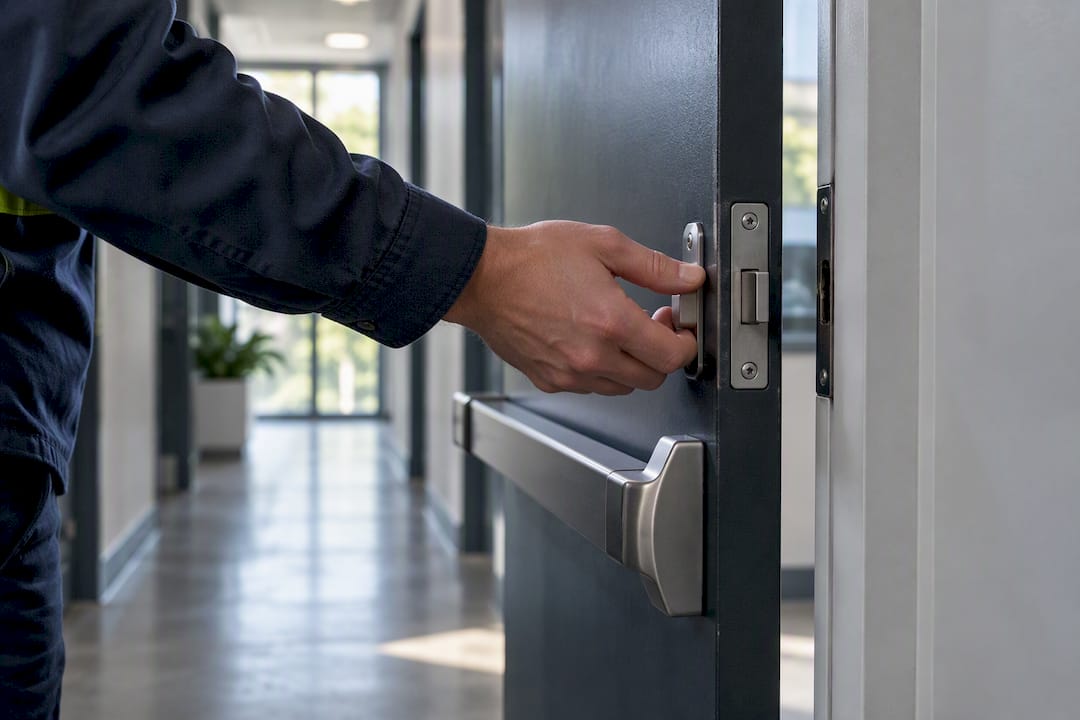
Assign specific search zones ahead of time and train wardens on genuine last-person-out technique: check every room, including ones people assume are empty. False clearances are one of the most common drill failures, and they usually trace back to skipped rooms, not carelessness.
Test your visitor and contractor sign-in system during drills, not just your fire alarm. A headcount is only as accurate as the roster behind it. Watch for poor secondary exit signage and elevators that haven’t been drilled for recall in months.
A Few Lessons From the Floor
Build your checks into your existing routine, not a separate task list. And write things down as you go. A logged fault beats a remembered one every time an auditor asks for proof.
— Flipmind
Why Roll-Call Technology Changes the Math During an Evacuation
A paper sign-in sheet works fine until the building has 40 visitors, 12 contractors, and a fire alarm going off at once. That’s the moment headcounts slow down, and slow headcounts are what turn a routine drill into a genuinely risky evacuation.

An automated system pairs your staff roster with a live, auditable visitor history, so when the alarm sounds, your roll call already knows who signed in that day, contractors included. That’s the gap Entry closes: contactless sign-in at the door, an emergency roll-call feature that pulls a real-time occupancy list, and self-service kiosks that keep the front desk from becoming a bottleneck on a normal Tuesday, let alone during an evacuation.
When you’re evaluating any visitor system for this purpose, look for the same fundamentals: contactless check-in, an emergency roll-call function, kiosk support so reception isn’t a chokepoint, and audit logs you can hand to a regulator without reconstructing anything by memory. Entry’s visitor management features cover that ground, and the platform is free for founding customers through 2027, per current pricing. Set up a kiosk, connect it to your sign-in flow, and see how much time a real-time roster saves the next time you run a drill.
Templates and Regulator Guidance Worth Bookmarking
- Fire drill checklist template for logging drill records
- Drill evaluation checklist for scoring performance
Use the record fields covered above when filling these out.
Sources
FAQ
What Are the Main Duties and Responsibilities of a Fire Warden?
A fire warden runs routine prevention checks on alarms, exits, and extinguishers, then leads evacuation, headcounts, and re-entry control during an actual emergency. The role also includes drill planning and keeping accurate records that prove compliance during an audit.
What Belongs on a Fire Warden Checklist?
A complete checklist covers daily exit and signage checks, weekly extinguisher and fire-door inspections, and drill documentation fields like drill conductor identity, evacuation time, and number of occupants accounted for. Most templates list several required fields, based on the West Metro Fire evaluation checklist.
What Should Fire Wardens Ensure During an Evacuation?
Wardens must confirm every occupant, including visitors and contractors, is accounted for, prevent elevator use, and assist anyone with mobility or sensory limitations using a pre-assigned helper. No one re-enters the building until emergency services confirm it’s safe.
How Often Should Fire Drills Be Run?
Drill frequency depends on local fire codes and building occupancy type, so check with your local authority having jurisdiction for the exact requirement. Varying the timing and simulating different conditions, rather than running the same drill on a predictable schedule, produces more reliable evacuation data.
Can Visitor Sign-In Software Help With Fire Warden Duties?
Yes. A system with an emergency roll-call feature gives wardens a live, auditable list of everyone on site, including visitors and contractors, which speeds up headcounts during an evacuation and creates a record for post-incident review.